• Skip to primary navigation
  • Skip to main content
  • Skip to primary sidebar
  • Home
  • Meet Our Team
  • About OT
  • Evaluations & Services
  • Testimonials
  • Blog
  • Books
    • Email
    • Facebook
    • Instagram
    • Phone

Building Blocks Pediatric Occupational Therapy Services

Fairfield Connecticut Occupational Therapist

203-341-0178
943 Post Rd E Suite A
Westport, CT 06880
bbpedot@yahoo.com
  • Home
  • Meet Our Team
  • About OT
  • Evaluations & Services
  • Books
  • Testimonials
  • Blog
    • Email
    • Facebook
    • Instagram
    • Phone

Progression of Dressing Skills

November 8, 2021 By admin

Developmental Progression of Dressing Skills

Becoming independent in dressing typically takes four years of practice and requires a variety of skills. Over time, children gain more awareness of where their body is in space and gradually learn how to move their arms and legs to complete dressing tasks. A child must learn how to coordinate the two sides of their body and use appropriate grip and force when manipulating clothing including fasteners. Sequencing or being able to complete dressing steps in the correct order is also an important skill required for dressing.

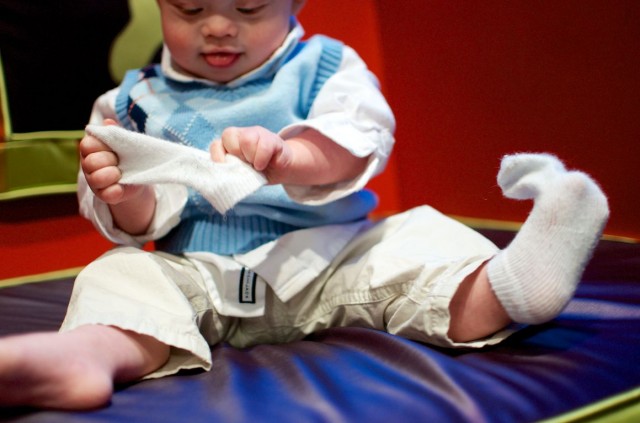
Age 1:

Around this age, children will be able to assist with dressing by cooperating during the activity such as pushing their arms through shirt sleeves and legs through pant openings. They will also be able to pull off their socks.
 

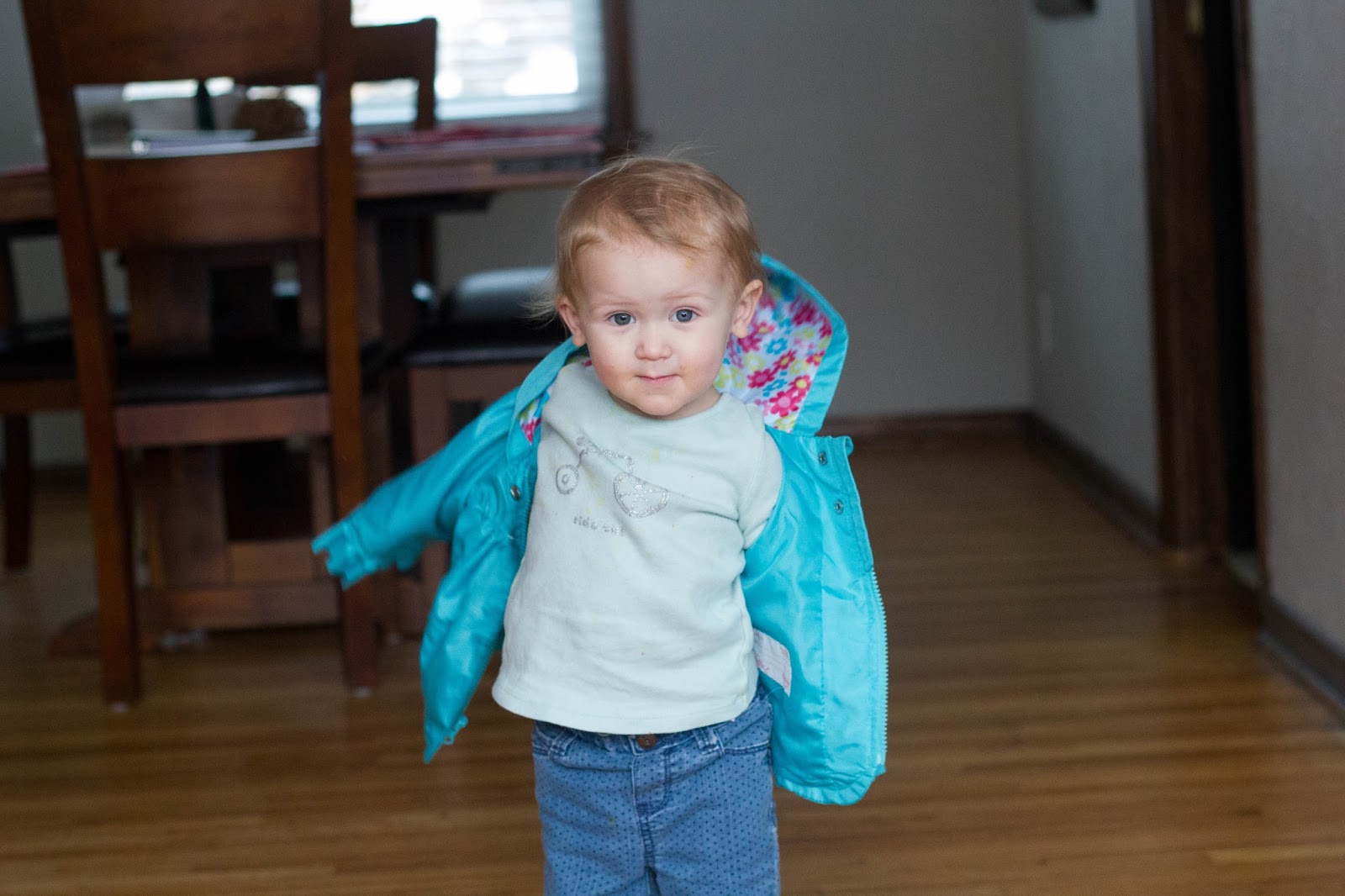
Age 2:

Toddlers at this age will be able to remove their coat after fasteners have been unfastened, as well as remove their shoes if they are not tied. They will also begin to help with pulling down their pants. Once a shirt is placed over their head by an adult, they can find and push their arms through the arm holes.
 

Age 2½:

Toddlers at this age will start to be able to pull down pants with an elastic waistband. They will also start to assist with putting on socks, coat, and shirt. They will also be able to unbutton large buttons.


Age 3:

At age 3, toddlers will be able to put on a pullover shirt with little assistance. They will be able to put on their shoes, although they may attempt to place their foot in the wrong shoe. They will also be able to put on their socks with assistance needed to adjust the sock properly on their heel. Toddlers will start to button large buttons and zip and unzip a jacket if the shank is already connected.


Age 3½:

Children at this age can distinguish between the front and back of clothing items and can dress themselves with supervision. They will be able to unzip a jacket and separate the shank independently. They will also start to learn how to unbuckle a belt with practice and button multiple buttons.


Age 4:

Children at this age will be able to remove pullover garment independently and place socks on their feet correctly. They may be able to lace their shoes but still need assistance with tying the laces. They will be able to fasten buckles and connect the shank and zip the zipper completely. When a child is around 4 1/2 years old, he or she will be able to weave belt through the belt loops on pants.


Age 5:

At age 5, children will be able to tie and untie knots. They will begin to dress without supervision.

Age 6:

At this age, children will tie bows and manage fasteners that are positioned on the back of garments.

Items that can help with dressing skills:


Dressing board to help with zippers, buttons, buckles, lacing and tying show laces.
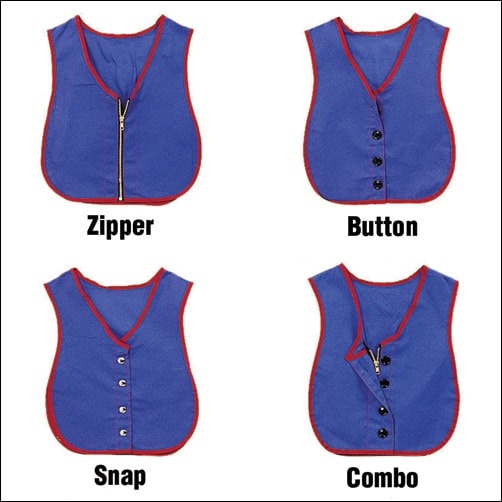
 

Dressing vests can be used to practice fastening skills on self.


Lacing cards can be used to practice lacing strings.


Filed Under: Uncategorized

Primary Sidebar

Latest Posts

The Peanut Ball: More Than Just a Ball

What are the Visual Perceptual Skills?

My OT Journey

One Pencil, Many Grips

Like Us on Facebook

Building Blocks Pediatric Occupational Therapy Services, LLC

Archives

Categories

More About Us

  • Home
  • Meet Our Team
  • About Occupational Therapy
  • Evaluations & Services
  • Contact Us
  • Blog
As a pediatric occupational therapist, I often tal As a pediatric occupational therapist, I often talk about going deeper than just “take a deep breath.” Deep breathing is more than a simple instruction—it’s a powerful tool that helps children connect with their bodies, regulate their emotions, and calm their nervous systems.
One of my favorite ways to teach this is with a breathing ball. It’s simple, colorful, and engaging, giving children a visual and hands-on way to understand what’s happening inside their bodies.
As you slowly open the ball, encourage your child to take a slow, deep breath in through their nose, imagining their lungs filling up just like the ball expands. This helps them become aware of how their body feels when they breathe in.
Then, as you slowly close the ball, have them gently blow all the air out through their mouth until their “chipmunk cheeks” are completely empty. Encourage them to keep blowing until every last bit of air is out. This full exhale is just as important as the inhale—it helps release tension and signals the body to relax.
Repeat this several times. The movement of the ball helps children pace their breathing and stay focused, making it much easier than simply telling them to “take a deep breath.” Over time, this builds body awareness, supports self-regulation, and helps children learn how to calm themselves when they feel overwhelmed.
This is an easy strategy to use at home, in the classroom, before homework, before bed, or anytime a child is feeling anxious, frustrated, or needs a reset.
Sometimes the simplest tools can make the biggest difference. 💙
#explorepages  #SelfRegulation #DeepBreathing #Sensory #Interoception
The Wilbarger Deep Pressure & Proprioceptive Techn The Wilbarger Deep Pressure & Proprioceptive Technique (DPPT)
Also known as the Wilbarger Brushing Protocol

The Wilbarger Protocol is a sensory-based OT intervention that provides deep pressure and proprioceptive input to help organize the nervous system, improve body awareness, and reduce tactile defensiveness.

Who may benefit?
• Tactile defensiveness
• Clothing or grooming sensitivities
• Emotional dysregulation
• Attention and transition difficulties
• Sensory seeking or avoiding behaviors
• Some children with sensory processing differences, ADHD, autism, or developmental delays

Brushing
🖐️ Firm, even pressure
• Brush proximal to distal
• No back-and-forth brushing
• Long, smooth strokes
• Keep the brush flat against the skin
• Brush arms, hands, back, legs, and feet only
🚫 Never brush the face, chest, stomach, or groin

Joint Compressions
🤲 Immediately follow brushing
• Support the limb
• Keep joints neutral
• Compress gently through the joint
• Never twist, pull, or force a joint

Benefits
✅ Better regulation
✅ Improved attention
✅ Increased body awareness
✅ Reduced tactile defensiveness
✅ Greater participation in daily activities

DPPT should only be taught and supervised by a trained occupational therapist and is individualized for every child.

💙 Helping children feel regulated, confident, and successful.

#OccupationalTherapy #ExplorePages #SensoryProcessing #EducationalContent #WilbargerProtocol
Sometimes the most meaningful therapy doesn’t lo Sometimes the most meaningful therapy doesn’t look like “therapy” at all.
Through play, children are building the foundational skills they need for everyday life. During this activity, we’re targeting balance, core strength, coordination, motor planning, bilateral coordination, visual tracking, and postural control—all while keeping therapy engaging and fun.
Play isn’t a break from learning. For children, play is learning.
#OccupationalTherapy #PediatricOT #PlayBasedTherapy #PlayBasedLearning #ChildDevelopment
Did you know that visual perception is about so mu Did you know that visual perception is about so much more than eyesight? 👀

Visual perception is the brain’s ability to make sense of what the eyes see. These skills play a huge role in everyday activities like reading, handwriting, completing puzzles, finding items in a backpack, and even getting dressed.

Swipe through to learn:
✨ What visual perception is
✨ The 7 visual perceptual skills
✨ How these skills impact daily life
✨ How occupational therapy can help

Want to learn more? Our newest blog takes a deeper dive into visual perception and how OT supports these important skills. Check out the link in our bio!

#PediatricOT #OccupationalTherapy #VisualPerception #VisualPerceptualSkills #ChildDevelopment
My journey to find occupational therapy may have t My journey to find occupational therapy may have taken a bit longer than others, but I 'm grateful for each experience that got me to where I am today!

For those who don't know me, my name is Colleen McGuinness and I have been completing my fieldwork rotation at Building Blocks Pediatric Occupational Therapy as an OT student for the past 3 months. So before I go, I want to tell you about my journey into OT!

Check out our latest blog post using the link in our bio to read more about my journey into OT!

#OTStudent #JourneytoOT #PediatricOT #BuildingBlocksOT
✏️ Not sure which pencil grip is right for you ✏️ Not sure which pencil grip is right for your child?

Each pencil grip is designed to support different needs, and choosing the right one can make writing more comfortable and efficient. Check out this quick overview, then head to the blog (link in bio) to learn more about each grip and how to choose the best fit!

#OccupationalTherapy #PediatricOT #FineMotorSkills #Handwriting #pencilgrips
When you play on the floor with your child or foll When you play on the floor with your child or follow their lead in a game, you are actually engaging in part of an important pediatric occupational therapy method known as Floortime!

This is a relationship-based therapy for children that helps with emotional and developmental growth. 

Check out our latest blog post using the link in our bio to learn more!

#FloortimeMethod #PediatricOT #OccupationalTherapy #BuildingBlocksOT
When your child says they spent OT on the swings, When your child says they spent OT on the swings, they were doing much more than just playing. 😊
Therapeutic swings help children build the skills they need for everyday activities through movement, balance, and sensory experiences that are fun and meaningful.
Read our latest blog to learn about the different types of swings used in pediatric OT. Link in bio! 💙  Photo Credits: @theottoolbox 
#pediatricot #OccupationalTherapy #SensoryPlay
Follow on Instagram

Copyright © 2026 · BBPOTS, LLC · Site Design by Little Blue Deer
Privacy Policy