• Skip to primary navigation
  • Skip to main content
  • Skip to primary sidebar
  • Home
  • Meet Our Team
  • About OT
  • Evaluations & Services
  • Testimonials
  • Blog
  • Books
    • Email
    • Facebook
    • Instagram
    • Phone

Building Blocks Pediatric Occupational Therapy Services

Fairfield Connecticut Occupational Therapist

203-341-0178
bbpedot@yahoo.com
  • Home
  • Meet Our Team
  • About OT
  • Evaluations & Services
  • Books
  • Testimonials
  • Blog
    • Email
    • Facebook
    • Instagram
    • Phone

Just Keep Swinging

February 5, 2025 By admin

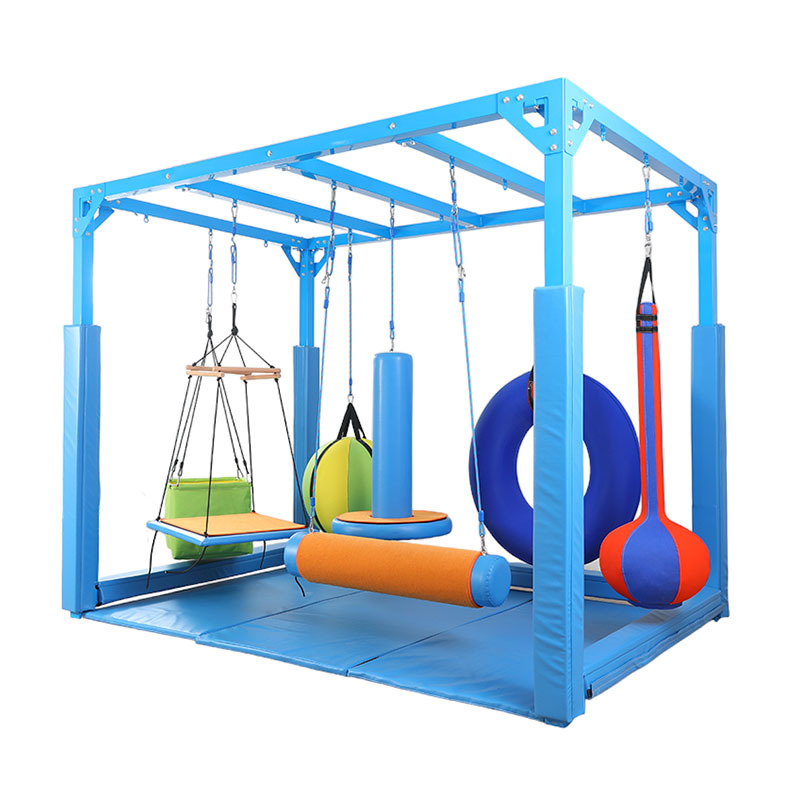
Children's Sensory Swing-Guangzhou Moetry Amusement Equipment Co.,Ltd.

What is a sensory swing?

              A sensory swing is a piece of suspended equipment. They are typically utilized in therapeutic settings: rehabilitation centers, outpatient clinics, schools, etc by occupational therapists (OTs). However, through consultation with an OT, they can be installed in homes.


What does a sensory swing do?

            Sensory swings provide vestibular, proprioceptive, and visual input to the central nervous system (CNS). Vestibular input is defined as information from the head, ear canals, and body that controls our balance, movement, and coordination. Proprioceptive input can be understood as information from the muscles, tendons, and joints that helps us with body awareness, posture, coordination, and use of force. Visual input is information received from the eyes, such as light, color, and movement. Depending on which movements are performed on the swing, they can be alerting or calming to the CNS. Rotary movements (spinning) can be stimulating to the CNS and could be utilized with individuals to increase their level of alertness, body awareness, and muscle tone. Linear movements (back-and-forth, side-to-side, up and down) can be regulating to the CNS and should be utilized with individuals who require


Who can use a sensory swing?

Typically, children with sensory processing difficulties utilize sensory swings. Children with sensory processing difficulties can include diagnoses, such as: SPD, ADD, ADHD, Anxiety, Austim, PTSD, etc. These diagnoses present with difficulty processing some or all of the following sensory information: visual, auditory, olfactory, oral, tactile, vestibular, and proprioceptive. However, all individuals of all ages can benefit from using them regardless of a diagnosis or condition existing.


Swing types and purposes:

  • Platform Swing
    • Provides vestibular and visual input.
    • Promotes balance, postural control, core strength.


  •  Lycra Swing
    • Provides vestibular and proprioceptive input.
    • Promotes organization and regulation of CNS, awareness of body in space, and attention/focus.


  • Bolster Swing
    • Provides vestibular input.
    • Promotes grasp, upper body strength, motor planning, bilateral coordination, crossing midline, balance, postural control, core stability, and lower body strength.


  •  Standard Duel Swing:
    • Provides vestibular, proprioceptive, and visual input.
    • Promotes core stability and motor planning.


  • Disc Swing:
    • Provides vestibular input.
    • Promotes grasp, upper body strength, bilateral coordination, balance, core strength, and motor planning.


  • Mushroom Swing:
    • Provides vestibular, proprioceptive, and visual input.
    • Promotes balance, postural control, core strength, bilateral motor coordination, and visuomotor coordination.


  •  Trapeze Bar:
    • Provides vestibular and proprioceptive input.
    • Promotes grasp, upper body strength, core stability, and endurance.


  • Steering Wheel Swing:
    • Provides vestibular input.
    • Promotes grasp, upper body strength, and core stability.


Safety First:Poster, Print Safety first illustrated sign, 40x26.7 cm

  • Ensure proper installment
  • Provide soft surface below
  • Consult an OT for how to utilize
  • Supervise children at all times

Filed Under: Therapy

Primary Sidebar

Latest Posts

My OT journey

🌈 Social and Emotional Skills in OT: “What is OT? Series Book 7 

🌀Sensory Skills in OT: “What Is OT?” Series Book 6

🏠 Life Skills in OT: “What Is OT?” Series Book 5

Like Us on Facebook

Building Blocks Pediatric Occupational Therapy Services, LLC

Archives

Categories

More About Us

  • Home
  • Meet Our Team
  • About Occupational Therapy
  • Evaluations & Services
  • Contact Us
  • Blog
📚 The What Is OT? Book Series By Justine “Jel 📚 The What Is OT? Book Series
By Justine “Jellybean” Bedocs

✨ A seven-book children’s series created to explain Occupational Therapy in a fun, simple, and meaningful way.

These books help children understand what OT is and how it helps them grow, learn, regulate, and gain confidence in everyday life. Perfect for therapists, teachers, parents, and caregivers to use at home, in schools, or in therapy sessions.

⸻

🌟 The Seven Books in the Series

📗 Book 1: What Is OT? What Will I Do There?
An introduction to occupational therapy and how it helps kids succeed every day.
👉 https://a.co/d/16Ql977

📘 Book 2: Hand Skills in OT
Focuses on fine motor skills like writing, cutting, buttoning, and strengthening little hands.
👉 https://a.co/d/7matwO8

🧠 Book 3: Brain and Body Skills in OT
Explains how the brain and body work together for focus, coordination, and regulation.
👉 https://a.co/d/f4Rwx8R

📗 Book 4: Eye and Hand Skills in OT
Covers visual motor and visual perceptual skills used for reading, writing, and play.
👉 https://a.co/d/5N2jD0p

📙 Book 5: Life Skills in OT
Highlights independence with dressing, feeding, routines, and daily living skills.
👉 https://a.co/d/aEGa8B5

📘 Book 6: Sensory Skills in OT
Helps children understand sensory processing and how to feel calm, focused, and regulated.
👉 https://a.co/d/if6K8f9

🌈 Book 7: Social and Emotional Skills in OT
Teaches emotional awareness, coping skills, confidence, and social connection.
👉 https://a.co/d/0bCHcTu

⸻

✨ These books are designed to help children feel confident, understood, and supported while helping parents and professionals explain OT in a simple and meaningful way.

📚 Full collection here:
👉 https://connecticutoccupationaltherapist.com/books/

Thank you for supporting this project and for sharing with families, educators, and therapists who may benefit 💛
— Justine Bedocs, OTR/L
Westport, Connecticut
Check out my final blog post about my OT journey a Check out my final blog post about my OT journey as a student with the link tagged in our bio! 🤗 💜#occupationaltherapystudent #nbcot
Had to join in on the Labubu (and Lafufu) craze, i Had to join in on the Labubu (and Lafufu) craze, in a fun fine motor way!🤩🧸🧡 #finemotoractivity #labubu #occupationaltherapy
Blogs of Books 3 and 4 are now live on the website Blogs of Books 3 and 4 are now live on the website. Click the link in bio to learn more about the "What is OT" Book Series and each character in the books!🤩📚 #occupationaltherapy #WhatIsOTBookSeries #westportmoms #pediatrics
Learn more about the different pencil grasps your Learn more about the different pencil grasps your child uses everyday with the link in our bio!✏️💫#occupationaltherapy #buildingblocksoccupationaltherapy #momsofwestport #pediatricot #aota #finemotor
Happy Halloween from Building Blocks Pediatric OT! Happy Halloween from Building Blocks Pediatric OT!🧙👻🧡 #spookyseason #happyhalloween🎃 #pedatricot #67
Prone Play = 💪 Child!! Link in bio to learn mor Prone Play = 💪 Child!! Link in bio to learn more about prone activities and how it can make your child stronger😎 #pediatricoccupationaltherapy #westportct #fun #buildingblocksoccupationaltherapy #otforkids
Bilateral coordination is the ability to use both Bilateral coordination is the ability to use both sides of the body simultaneously in a controlled and organized manner🤲. It supports tasks like writing, playing sports, and even tying your shoes! Link in bio to learn more about the importance of why using both hands matters💥 #occupationaltherapy #selfcaretips #blogpost #westportct #pediatricotlife
Follow on Instagram

Copyright © 2026 · BBPOTS, LLC · Site Design by Little Blue Deer
Privacy Policy