When your child comes home from OT and tells you they spent time on the swings, you might picture a trip to the playground. While playground swings are certainly fun, the swings used in occupational therapy are specially designed tools that help children build important motor, sensory, and regulation skills.
Let’s take a closer look at some of the therapeutic swings you may hear about after a session!
Platform Swing
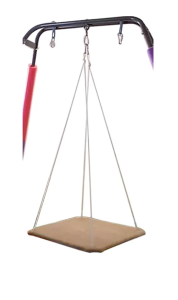
The platform swing is a large, flat surface that allows children to sit, stand, kneel, or lie down while moving.
When we use it:
Platform swings are often a great starting point for children who are new to swinging or who need extra support while working on balance and body control.
How it translates to daily life:
- Maintaining an upright posture while sitting for meals, homework, and circle time.
- Navigating playground equipment and uneven surfaces with greater confidence.
- Participating in games that involve running, jumping, and changing directions.
- Remaining calm and organized during transitions and structured activities.
Mushroom Swing
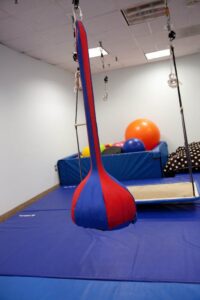
The mushroom swing is a rounded dome-shaped swing that children sit on while balancing and moving.
When we use it:
This swing is ideal for targeting balance, postural reactions, and core stability in a fun and challenging way.
How it translates to daily life:
- Sitting upright during handwriting and classroom activities without constantly leaning or slouching.
- Staying balanced while getting dressed, such as putting on pants while standing.
- Riding a bicycle or scooter with improved control.
- Participating more confidently in sports and active play.
Frog Swing
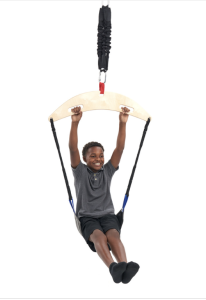
The frog swing features handles and can be used while sitting, standing, or lying on the stomach.
When we use it:
This swing is great for children working on upper body strength, motor planning, balance, and overcoming fears related to movement.
How it translates to daily life:
- Hanging from monkey bars and climbing playground structures.
- Using both hands together when getting dressed, opening containers, or completing crafts.
- Learning new movement sequences, such as dance routines or sports skills.
- Improving endurance for activities that require sustained arm and shoulder strength, including writing and coloring.
Astronaut Swing
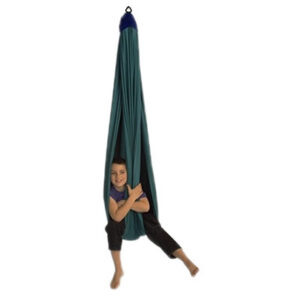
The astronaut swing is a fabric hammock-like swing that allows children to swing, bounce, spin, and cocoon themselves within the material.
When we use it:
This versatile swing can be adapted for children of all ages and sensory needs.
How it translates to daily life:
- Tolerating busy environments like the classroom, cafeteria, or birthday parties.
- Recovering more easily from frustration or overstimulation.
- Transitioning between activities with fewer emotional outbursts.
- Participating in family outings, community activities, and social events with greater success.
Why Do Occupational Therapists Use Swings?
Therapeutic swings are much more than just fun. They provide opportunities to build strength, coordination, balance, body awareness, motor planning, and self-regulation skills, all while keeping children engaged in meaningful play.
The next time your child tells you they spent time on a swing in OT, you’ll know there was a lot more happening than just having fun!