• Skip to primary navigation
  • Skip to main content
  • Skip to primary sidebar
  • Home
  • Meet Our Team
  • About OT
  • Evaluations & Services
  • Testimonials
  • Blog
  • Books
    • Email
    • Facebook
    • Instagram
    • Phone

Building Blocks Pediatric Occupational Therapy Services

Fairfield Connecticut Occupational Therapist

203-341-0178
943 Post Rd E Suite A
Westport, CT 06880
bbpedot@yahoo.com
  • Home
  • Meet Our Team
  • About OT
  • Evaluations & Services
  • Books
  • Testimonials
  • Blog
    • Email
    • Facebook
    • Instagram
    • Phone

Sensory Integration

June 17, 2025 By admin

What is sensory Integration?

Neurological organization of sensory input to be able to participate in activities of everyday life. Everyone may integrate sensory differently and even integrate each sense differently. Dr. A. Jean Ayres is commonly known for her work in increasing information on sensory integration.
 

Why does it matter?

It is important to properly integrate sensory information because it allows for increased attention, motor skills, emotional regulation, and increases social skills. If a child is unable to filter out irrelevant sounds then they will likely have trouble listening in class and other areas of their life. The same goes for motor skills. If a child does not have body awareness, then they will likely have trouble with writing activities, sports, and self care skills such as dressing. If a child is not integrating sensory properly, they may also be more likely to be emotionally dysregulated. Lastly, sensory integration helps increase social interaction skills because sensory integration helps people understand social cues. 

Using Sensory Integration in the Clinic:

Sensory integration techniques can be used in the clinic to work towards appropriate, adaptive responses to sensory stimuli. Sensory integration can help those with developmental, behavioral and learning deficits. By creating the just right challenge with sensory integration interventions, individuals can work to better integrate sensory based on their specific needs. These activities often involve using vestibular, proprioceptive, auditory and tactile stimuli which help to organize the sensory system.


What are examples of activities?


  • Joint compressions for proprioceptive input
  • Oral motor exercises for gustatory input
  • Ayres sensory integration utilizes more than one sensory system at a time such as utilizing the therapeutic listening program while in an astronaut swing benign bounced. 
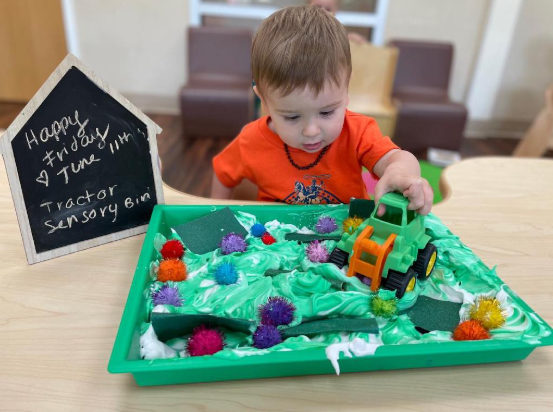
  • Playing with different textures or a sensory bin when in prone on a peanut ball for tactile and proprioceptive input
  • Navigating obstacle courses often provide proprioceptive and vestibular input
  • Put the child on a yoga ball and move them in a plus sign on the yoga ball which works core and weight shifting through this proprioceptive activity
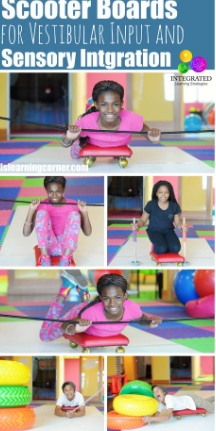
  • Have the child prone on a scooter board, holding onto a rope and pulling themselves across the room. This provides proprioceptive input. 


In conclusion, sensory integration is a valuable tool that can be used to help those with sensory difficulties better engage in everyday life.

Resources:

Guardado, K. E. (2023, July 31). Sensory integration. StatPearls [Internet]. https://www.ncbi.nlm.nih.gov/books/NBK559155/ 

Theradmin. (2024a, June 26). The importance of sensory integration. TheraYouth Foundation Therapy for Children of all Ages. https://therayouth.org/the-importance-of-sensory-integration/ 


Filed Under: Uncategorized

Primary Sidebar

Latest Posts

Why Crawling is Important

The Peanut Ball: More Than Just a Ball

What are the Visual Perceptual Skills?

My OT Journey

Like Us on Facebook

Building Blocks Pediatric Occupational Therapy Services, LLC

Archives

Categories

More About Us

  • Home
  • Meet Our Team
  • About Occupational Therapy
  • Evaluations & Services
  • Contact Us
  • Blog
Why do pediatric OTs care about crawling? 🐻💙 Why do pediatric OTs care about crawling? 🐻💙

Crawling is about so much more than just helping your baby get from one place to another. It’s an important developmental skill that supports strength, coordination, sensory processing, and body awareness.

When babies crawl, they are building the foundation for future skills like walking, climbing, handwriting, and everyday activities. Crawling also encourages cross-body movement, helping both sides of the brain communicate and supporting overall motor development.

While every child develops differently, crawling provides so many opportunities for babies to explore, learn, and build important skills through movement.

Want to learn more about why crawling matters and how it supports your child’s development? 🧠✨

Check out our newest blog: “Why Crawling Is an Important Milestone”
🔗 Link in bio!

#PediatricOT #OccupationalTherapy #ChildDevelopment #BabyDevelopment #explorepages
Congratulations to our sweet Vivian Schmidt on her Congratulations to our sweet Vivian Schmidt on her high school graduation from Staples High! 💜

It is so hard to believe it’s time to say goodbye as you head off to Texas Christian University.

Over the past few years, you’ve become such a special part of the Building Blocks Pediatric Occupational Therapy Services family. Through your volunteering and internship, you’ve touched the lives of so many children with your kindness, patience, compassion, and joyful spirit.

You are every smile you’ve shared, every child you’ve encouraged, every laugh you’ve sparked, and every connection you’ve made. Those moments will stay with all of us forever.

We all love you, we’re so proud of you, and we know you’re going to accomplish incredible things. Keep chasing your dreams, and maybe one day you’ll come back as an occupational therapist and work alongside us. We’d love that more than you know.

Good luck at TCU, Vivian. Go shine your light, we can’t wait to see all you’ll accomplish! 💜🐸

#BuildingBlocksPediatricOTServices #TexasChristianUniversity #StaplesHighSchool #WestportCT #FutureOT
Welcome to Building Blocks Pediatric OT! ✨ Take Welcome to Building Blocks Pediatric OT! ✨ Take a peek inside our clinic and explore the spaces where children learn, play, and grow every day. From our fine motor room to our sensory gym, every area is thoughtfully designed to support development through meaningful, engaging therapy experiences. 💙
We’re proud to share our space with Speech & Feeding Kids, giving families access to both pediatric occupational therapy and speech-language pathology services in one convenient location.
📍 943 Post Rd E #A, Westport, CT 06880
We’d love to welcome your family to our clinic! 💙
#occupationaltherapy #pediatricot #westport #ᴇxᴘʟᴏʀᴇᴘᴀɢᴇ  @building_blocks_stories @speechandfeedingkids @justinecarol77 @drake079
Recognizing feelings is only the first step. Knowi Recognizing feelings is only the first step. Knowing what to do next is where true self regulation begins.

There are many wonderful programs that help children identify emotions and body signals, including the Zones of Regulation®, The Alert Program® (“How Does Your Engine Run?”), The Mood Meter®, The Incredible 5 Point Scale®, The Superflex® Curriculum, and The Color Monster®. These programs teach children to recognize how they feel through interoception, our ability to notice internal body sensations like a racing heart, tense muscles, butterflies in the stomach, or low energy.

But once a child recognizes how they feel…

Then what?

This is often the missing piece.

I created this quick visual guide to bridge the gap between recognizing body signals and choosing sensory strategies that help children regulate.

A child in the Red Zone may benefit from deep breathing, deep pressure, a quiet space, or asking for help. A child in the Yellow Zone may need movement, heavy work, or calming sensory input before becoming overwhelmed. A child in the Blue Zone may need alerting activities to wake up the brain and body.

Most importantly, every nervous system is unique.

What helps one child feel calm may make another child more alert. What energizes one child may overwhelm another. Self regulation is not about finding one strategy that works for everyone. It is about helping each child discover their own sensory toolbox through trial, observation, and practice.

This guide gives parents, teachers, therapists, and students a simple way to:
• Recognize body signals
• Connect feelings with sensory needs
• Choose regulation strategies
• Build independence and self awareness
• Develop lifelong self regulation skills

The goal isn’t just identifying emotions. It’s empowering children to understand their own nervous system and know what helps them return to a calm, regulated, and ready-to-learn state.

#Interoception #SensoryIntegration #explorepage #BuildingBlocksPediatricOccupationalTherapyServices #occupationaltherapy
Recognizing feelings is only the first step. Knowi Recognizing feelings is only the first step. Knowing what to do next is where true self regulation begins.

There are many wonderful programs that help children identify emotions and body signals, including the Zones of Regulation®, The Alert Program® (“How Does Your Engine Run?”), The Mood Meter®, The Incredible 5 Point Scale®, The Superflex® Curriculum, and The Color Monster®. These programs teach children to recognize how they feel through interoception, our ability to notice internal body sensations like a racing heart, tense muscles, butterflies in the stomach, or low energy.

But once a child recognizes how they feel…

Then what?

This is often the missing piece.

I created this quick visual guide to bridge the gap between recognizing body signals and choosing sensory strategies that help children regulate.

A child in the Red Zone may benefit from deep breathing, deep pressure, a quiet space, or asking for help. A child in the Yellow Zone may need movement, heavy work, or calming sensory input before becoming overwhelmed. A child in the Blue Zone may need alerting activities to wake up the brain and body.

Most importantly, every nervous system is unique.

What helps one child feel calm may make another child more alert. What energizes one child may overwhelm another. Self regulation is not about finding one strategy that works for everyone. It is about helping each child discover their own sensory toolbox through trial, observation, and practice.

This guide gives parents, teachers, therapists, and students a simple way to:
• Recognize body signals
• Connect feelings with sensory needs
• Choose regulation strategies
• Build independence and self awareness
• Develop lifelong self regulation skills

The goal isn’t just identifying emotions. It’s empowering children to understand their own nervous system and know what helps them return to a calm, regulated, and ready-to-learn state.

#Interoception #SensoryIntegration #explorepage #BuildingBlocksPediatricOccupationalTherapyServices #OccupationalTherapy
Wondering what happens during an occupational ther Wondering what happens during an occupational therapy session? 
What Is OT and What Will I Do There? was written to help take the mystery out of pediatric occupational therapy. Whether your child is preparing for their very first OT visit or you’re a parent, teacher, or therapist looking for a simple way to explain what OT is, this book makes it easy to understand.
Children will discover that OT is so much more than play. Every swing, obstacle course, craft, game, and activity has a purpose, helping build the skills needed for everyday life, including fine motor skills, sensory processing, self-care, emotional regulation, visual motor integration, and confidence.
My goal is to help children feel excited about therapy and help families understand the “why” behind everything we do. ❤️
Have you ever wondered what OT is all about?
#OccupationalTherapy #PediatricOT #ChildDevelopment #SensoryIntegration #explorepage
The Wilbarger Deep Pressure & Proprioceptive Techn The Wilbarger Deep Pressure & Proprioceptive Technique (DPPT)
Also known as the Wilbarger Brushing Protocol

The Wilbarger Protocol is a sensory-based OT intervention that provides deep pressure and proprioceptive input to help organize the nervous system, improve body awareness, and reduce tactile defensiveness.

Who may benefit?
• Tactile defensiveness
• Clothing or grooming sensitivities
• Emotional dysregulation
• Attention and transition difficulties
• Sensory seeking or avoiding behaviors
• Some children with sensory processing differences, ADHD, autism, or developmental delays

Brushing
🖐️ Firm, even pressure
• Brush proximal to distal
• No back-and-forth brushing
• Long, smooth strokes
• Keep the brush flat against the skin
• Brush arms, hands, back, legs, and feet only
🚫 Never brush the face, chest, stomach, or groin

Joint Compressions
🤲 Immediately follow brushing
• Support the limb
• Keep joints neutral
• Compress gently through the joint
• Never twist, pull, or force a joint

Benefits
✅ Better regulation
✅ Improved attention
✅ Increased body awareness
✅ Reduced tactile defensiveness
✅ Greater participation in daily activities

DPPT should only be taught and supervised by a trained occupational therapist and is individualized for every child.

💙 Helping children feel regulated, confident, and successful.

#OccupationalTherapy #explorepage  #SensoryProcessing #Brushing #WilbargerProtocol
It may look like a simple puzzle, but this activit It may look like a simple puzzle, but this activity is doing so much more!

Lying on a peanut ball helps build core and shoulder strength, postural control, and visual motor skills, all through play.

Want to learn why the peanut ball is one of our favorite OT tools? Read our latest blog. Link in bio!

#PediatricOT #OccupationalTherapy #explorepages #ChildDevelopment #PlayBasedLearning
Follow on Instagram

Copyright © 2026 · BBPOTS, LLC · Site Design by Little Blue Deer
Privacy Policy