• Skip to primary navigation
  • Skip to main content
  • Skip to primary sidebar
  • Home
  • Meet Our Team
  • About OT
  • Evaluations & Services
  • Testimonials
  • Blog
  • Books
    • Email
    • Facebook
    • Instagram
    • Phone

Building Blocks Pediatric Occupational Therapy Services

Fairfield Connecticut Occupational Therapist

203-341-0178
943 Post Rd E Suite A
Westport, CT 06880
bbpedot@yahoo.com
  • Home
  • Meet Our Team
  • About OT
  • Evaluations & Services
  • Books
  • Testimonials
  • Blog
    • Email
    • Facebook
    • Instagram
    • Phone

Sensory Diets..What Are They and How Can They Help?

August 2, 2026 By admin

What is a sensory diet? 
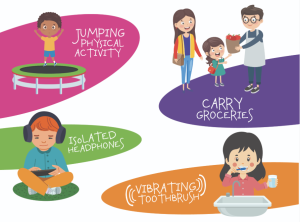
Think of a sensory diet as a personalized toolkit that helps your child feel their best! It is a plan created just for them, using activities that provide sensory input through all eight senses based on their unique needs. The plan includes recommendations for how often, how long, and how intensely these activities should be used. It is important to remember that a sensory diet is not a strict schedule. Just like our moods and energy levels change from day to day, so do a child’s sensory needs. Instead, it serves as a guide to help parents and caregivers recognize their child’s cues and choose the sensory strategies that will be most helpful in the moment. The truth is, everyone has a sensory diet. We all naturally seek out sensory input throughout the day. Some of us just do it without even realizing it!


Who benefits from a sensory diet? 

The short answer? Anyone! We all use sensory strategies every day, whether we realize it or not. However, sensory diets are especially helpful for individuals who have difficulty processing sensory information. This may include people with diagnoses such as Sensory Processing Disorder (SPD), ADHD, Autism Spectrum Disorder (ASD), anxiety, PTSD, Disruptive Mood Dysregulation Disorder (DMDD), and many others.

Not everyone experiences sensory input the same way. Some individuals are sensory seeking and crave more movement, touch, or other sensory experiences. Others are sensory avoiding and may feel overwhelmed by certain sensations, causing them to avoid them whenever possible. Some people have poor registration, meaning they may not notice sensory input as easily and often need stronger or more alerting input to respond. Others are sensory sensitive, meaning they notice sensory input quickly and may become overwhelmed by sounds, textures, lights, or movement.

It’s also important to remember that sensory preferences are not “all or nothing.” For example, a child who avoids loud noises may love messy play or seek out movement. Someone can be sensory seeking for one sensory system while being sensory avoiding for another. That is why a sensory diet should always be individualized. A well-designed sensory diet can include a variety of strategies to support different sensory needs across different sensory systems, helping each person regulate in a way that works best for them.


How Do You Know If Your Child May Benefit From a Sensory Diet?

Every child has unique sensory preferences, but some children have a harder time processing sensory information, which can make everyday activities more challenging. If your child frequently seems overwhelmed, constantly seeks movement, or has difficulty staying regulated, a sensory diet may be beneficial.

Some signs you may notice include:

  • Constantly jumping, crashing, climbing, or spinning
  • Difficulty sitting still during meals or schoolwork
  • Covering their ears or becoming upset by everyday sounds
  • Avoiding certain clothing, food textures, or messy play
  • Chewing on shirts, pencils, or other non-food items
  • Having big emotional reactions during transitions
  • Frequently seeking hugs, squeezes, or deep pressure
  • Appearing tired, “zoned out,” or needing extra prompting to notice what’s going on around them

Remember, having one or two of these behaviors does not necessarily mean your child has sensory processing differences. Every child is different, and these behaviors should always be considered within the context of the whole child.

How to utilize a Sensory Diet:

Once a sensory diet is created, it often looks like a simple daily schedule that outlines when to use different sensory strategies and how to incorporate them throughout the day. The goal is not to add more to your child’s routine, but to weave sensory activities into what they are already doing. Sometimes this means adding a movement break before homework, using a fidget during circle time, or making small changes to everyday activities to better support regulation. Every sensory diet is unique because every child is unique! Below, we’ll take a closer look at the eight sensory systems and explore examples of sensory input that can support each one.


What Does a Sensory Diet Look Like?

A sensory diet doesn’t have to be complicated! In fact, the best sensory diets fit naturally into your child’s daily routine. Instead of adding extra tasks to your day, sensory activities are often incorporated into things your child is already doing.

Here’s an example of what a sensory diet might look like:

Morning

  • Wall push-ups before getting dressed
  • A crunchy breakfast such as toast or apples
  • Carrying their backpack to the car

During School

  • Sitting on a wiggle cushion
  • Taking short movement breaks between assignments
  • Using a fidget during independent work
  • Drinking water through a straw

After School

  • Playing outside on the swings
  • Completing an obstacle course
  • Riding a scooter or bike
  • Playing with Play-Doh or Theraputty

Evening

  • Helping carry groceries or laundry
  • Taking a warm bath
  • Reading while snuggled under a cozy blanket
  • Practicing deep breathing before bed

Every sensory diet looks different because every child has different needs. What works well for one child may not be the best strategy for another.


A sensory diet is not about changing who your child is. It is about understanding their sensory needs and providing them with the tools to feel regulated, comfortable, and confident throughout their day.


Filed Under: Uncategorized

Primary Sidebar

Latest Posts

Sensory Diets..What Are They and How Can They Help?

Therapeutic Listening: A Different Way to Support Your Child’s Development

Why Crawling is Important

The Peanut Ball: More Than Just a Ball

Like Us on Facebook

Building Blocks Pediatric Occupational Therapy Services, LLC

Archives

Categories

More About Us

  • Home
  • Meet Our Team
  • About Occupational Therapy
  • Evaluations & Services
  • Contact Us
  • Blog
What exactly is a sensory diet? 🤔 If you’ve What exactly is a sensory diet? 🤔

If you’ve ever heard the term but weren’t quite sure what it meant, this post is for you! A sensory diet is so much more than a list of activities, it’s a personalized approach to helping children feel regulated, confident, and ready to participate in everyday life.

This carousel covers the basics, but there’s so much more to learn!

✨ Head to our blog to read the full guide, where we cover:
• What a sensory diet is
• Who can benefit
• Signs your child may benefit from one
• What a sensory diet looks like in everyday life
• And examples of activities for all 8 sensory systems

🔗 Visit the link in our bio to read the full blog!

💙 Save this post for later and share it with someone who might find it helpful.

#OccupationalTherapy #PediatricOT #SensoryProcessing #ᴇxᴘʟᴏʀᴇᴘᴀɢᴇ #ParentEducation
Bubbles aren’t just fun… they’re therapy. 🫧✨

Sometimes blowing through a traditional bubble wand can be tricky, so we meet kids where they are. By blowing through a straw into soapy water, we can practice the same oral motor skills in a way that’s often easier and more motivating.

This activity helps target:
🫧 Breath control
💨 Lip closure
🗣️ Oral motor coordination
🌬️ Grading the force of exhalation

Small adaptations can make a big difference in building confidence and supporting future skills like speech and feeding. 💙

#PediatricOT #OccupationalTherapy #OralMotorSkills #PlayBasedTherapy #explorepage
🎧 Did you know sound can be used as a therapeut 🎧 Did you know sound can be used as a therapeutic tool?

Therapeutic Listening is more than simply listening to music. It uses specially designed recordings to help support sensory processing, attention, self-regulation, and participation in everyday activities.

When combined with occupational therapy, movement, and play, Therapeutic Listening can help children build the skills they need to feel more regulated and engaged throughout their day.

Every listening program is individualized by an occupational therapist based on each child’s unique strengths and goals.

✨ Head to our blog to learn:
• What Therapeutic Listening is
• How it works
• Who it may benefit
• Why it’s used in pediatric OT

Have you heard of Therapeutic Listening before? Let us know in the comments! ⬇️ #OccupationalTherapy #PediatricOT #TherapeuticListening #SensoryProcessing #SensoryIntegration
Why do pediatric OTs care about crawling? 🐻💙 Why do pediatric OTs care about crawling? 🐻💙

Crawling is about so much more than just helping your baby get from one place to another. It’s an important developmental skill that supports strength, coordination, sensory processing, and body awareness.

When babies crawl, they are building the foundation for future skills like walking, climbing, handwriting, and everyday activities. Crawling also encourages cross-body movement, helping both sides of the brain communicate and supporting overall motor development.

While every child develops differently, crawling provides so many opportunities for babies to explore, learn, and build important skills through movement.

Want to learn more about why crawling matters and how it supports your child’s development? 🧠✨

Check out our newest blog: “Why Crawling Is an Important Milestone”
🔗 Link in bio!

#PediatricOT #OccupationalTherapy #ChildDevelopment #BabyDevelopment #explorepages
Congratulations to our sweet Vivian Schmidt on her Congratulations to our sweet Vivian Schmidt on her high school graduation from Staples High! 💜

It is so hard to believe it’s time to say goodbye as you head off to Texas Christian University.

Over the past few years, you’ve become such a special part of the Building Blocks Pediatric Occupational Therapy Services family. Through your volunteering and internship, you’ve touched the lives of so many children with your kindness, patience, compassion, and joyful spirit.

You are every smile you’ve shared, every child you’ve encouraged, every laugh you’ve sparked, and every connection you’ve made. Those moments will stay with all of us forever.

We all love you, we’re so proud of you, and we know you’re going to accomplish incredible things. Keep chasing your dreams, and maybe one day you’ll come back as an occupational therapist and work alongside us. We’d love that more than you know.

Good luck at TCU, Vivian. Go shine your light, we can’t wait to see all you’ll accomplish! 💜🐸

#BuildingBlocksPediatricOTServices #TexasChristianUniversity #StaplesHighSchool #WestportCT #FutureOT
Welcome to Building Blocks Pediatric OT! ✨ Take Welcome to Building Blocks Pediatric OT! ✨ Take a peek inside our clinic and explore the spaces where children learn, play, and grow every day. From our fine motor room to our sensory gym, every area is thoughtfully designed to support development through meaningful, engaging therapy experiences. 💙
We’re proud to share our space with Speech & Feeding Kids, giving families access to both pediatric occupational therapy and speech-language pathology services in one convenient location.
📍 943 Post Rd E #A, Westport, CT 06880
We’d love to welcome your family to our clinic! 💙
#occupationaltherapy #pediatricot #westport #ᴇxᴘʟᴏʀᴇᴘᴀɢᴇ  @building_blocks_stories @speechandfeedingkids @justinecarol77 @drake079
Recognizing feelings is only the first step. Knowi Recognizing feelings is only the first step. Knowing what to do next is where true self regulation begins.

There are many wonderful programs that help children identify emotions and body signals, including the Zones of Regulation®, The Alert Program® (“How Does Your Engine Run?”), The Mood Meter®, The Incredible 5 Point Scale®, The Superflex® Curriculum, and The Color Monster®. These programs teach children to recognize how they feel through interoception, our ability to notice internal body sensations like a racing heart, tense muscles, butterflies in the stomach, or low energy.

But once a child recognizes how they feel…

Then what?

This is often the missing piece.

I created this quick visual guide to bridge the gap between recognizing body signals and choosing sensory strategies that help children regulate.

A child in the Red Zone may benefit from deep breathing, deep pressure, a quiet space, or asking for help. A child in the Yellow Zone may need movement, heavy work, or calming sensory input before becoming overwhelmed. A child in the Blue Zone may need alerting activities to wake up the brain and body.

Most importantly, every nervous system is unique.

What helps one child feel calm may make another child more alert. What energizes one child may overwhelm another. Self regulation is not about finding one strategy that works for everyone. It is about helping each child discover their own sensory toolbox through trial, observation, and practice.

This guide gives parents, teachers, therapists, and students a simple way to:
• Recognize body signals
• Connect feelings with sensory needs
• Choose regulation strategies
• Build independence and self awareness
• Develop lifelong self regulation skills

The goal isn’t just identifying emotions. It’s empowering children to understand their own nervous system and know what helps them return to a calm, regulated, and ready-to-learn state.

#Interoception #SensoryIntegration #explorepage #BuildingBlocksPediatricOccupationalTherapyServices #occupationaltherapy
Recognizing feelings is only the first step. Knowi Recognizing feelings is only the first step. Knowing what to do next is where true self regulation begins.

There are many wonderful programs that help children identify emotions and body signals, including the Zones of Regulation®, The Alert Program® (“How Does Your Engine Run?”), The Mood Meter®, The Incredible 5 Point Scale®, The Superflex® Curriculum, and The Color Monster®. These programs teach children to recognize how they feel through interoception, our ability to notice internal body sensations like a racing heart, tense muscles, butterflies in the stomach, or low energy.

But once a child recognizes how they feel…

Then what?

This is often the missing piece.

I created this quick visual guide to bridge the gap between recognizing body signals and choosing sensory strategies that help children regulate.

A child in the Red Zone may benefit from deep breathing, deep pressure, a quiet space, or asking for help. A child in the Yellow Zone may need movement, heavy work, or calming sensory input before becoming overwhelmed. A child in the Blue Zone may need alerting activities to wake up the brain and body.

Most importantly, every nervous system is unique.

What helps one child feel calm may make another child more alert. What energizes one child may overwhelm another. Self regulation is not about finding one strategy that works for everyone. It is about helping each child discover their own sensory toolbox through trial, observation, and practice.

This guide gives parents, teachers, therapists, and students a simple way to:
• Recognize body signals
• Connect feelings with sensory needs
• Choose regulation strategies
• Build independence and self awareness
• Develop lifelong self regulation skills

The goal isn’t just identifying emotions. It’s empowering children to understand their own nervous system and know what helps them return to a calm, regulated, and ready-to-learn state.

#Interoception #SensoryIntegration #explorepage #BuildingBlocksPediatricOccupationalTherapyServices #OccupationalTherapy
Follow on Instagram

Copyright © 2026 · BBPOTS, LLC · Site Design by Little Blue Deer
Privacy Policy