• Skip to primary navigation
  • Skip to main content
  • Skip to primary sidebar
  • Home
  • Meet Our Team
  • About OT
  • Evaluations & Services
  • Testimonials
  • Blog
  • Books
    • Email
    • Facebook
    • Instagram
    • Phone

Building Blocks Pediatric Occupational Therapy Services

Fairfield Connecticut Occupational Therapist

203-341-0178
943 Post Rd E Suite A
Westport, CT 06880
bbpedot@yahoo.com
  • Home
  • Meet Our Team
  • About OT
  • Evaluations & Services
  • Books
  • Testimonials
  • Blog
    • Email
    • Facebook
    • Instagram
    • Phone

My Journey Into Occupational Therapy

August 9, 2026 By admin

When I look back at where my occupational therapy journey started, it is crazy to think about how much has changed in just a few years. I graduated from Quinnipiac University in 2024, and after graduation, I knew I wanted to continue my education and pursue a career where I could make a meaningful difference in people’s lives. That led me to Iona University and the Graduate Occupational Therapy Program, where I began learning what it truly means to be an occupational therapist.

Going into OT school, I knew I wanted to work with children, but I don’t think I fully understood what pediatric occupational therapy really looked like. I thought a lot about the skills children needed to develop, but I did not yet understand how important relationships, trust, creativity, and play would be. My Level II fieldwork at Building Blocks Pediatric Occupational Therapy Services completely changed the way I look at pediatric OT.
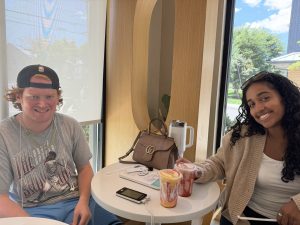
Over the past 12 weeks, I have learned so much about being an OT, but I have also learned a lot about myself. I became more confident in my ability to lead sessions, make clinical decisions, write SOAP notes and evaluations, and most importantly, tailor interventions to the individual child in front of me. I learned that there is no perfect activity that works for every child. Sometimes you have to change the activity, change your approach, or completely change your plan based on what the child needs that day.

One of the biggest things I learned was the importance of meeting children where they are. Some children walk into a session ready to jump right in, while others need more time to feel comfortable. I learned that sometimes using a quieter voice, giving a child time to warm up, or simply following their lead can make a huge difference. Building that connection first can make a child feel safe enough to participate and try something new.
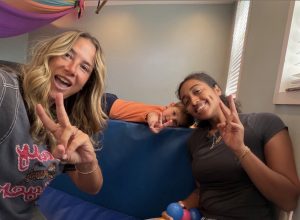
And of course, I learned that pediatric OT should be FUN! I love being playful with the kids and finding ways to turn their interests into meaningful therapeutic activities. Some of my favorite moments were not necessarily the biggest accomplishments on paper, but the little moments that showed me a child was proud of themselves or excited to share something they had learned.

One moment that will always stick with me is helping a child learn how to blow bubbles. At first, blowing bubbles was really difficult for him. Then, from one week to the next, he was able to take a strong breath and blow the bubbles on his own. It may seem like such a small accomplishment, but seeing how excited he was to show me that he could do it was so meaningful. It reminded me that progress does not have to be a huge milestone to be important. Sometimes the smallest victories are the ones you remember the most.
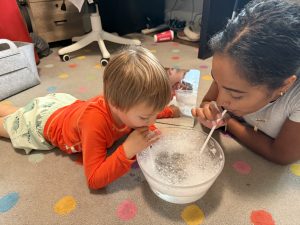
My time at Building Blocks also helped me discover areas of pediatric OT that I am especially passionate about, including feeding and emotional regulation. I loved being able to help children explore new foods, build confidence during mealtimes, and work through their sensory and emotional needs. These are areas I hope to continue learning about as I grow as an occupational therapist.

I am incredibly grateful for my experience at Building Blocks Pediatric Occupational Therapy Services. These 12 weeks have challenged me, pushed me outside of my comfort zone, and helped me become much more confident in the therapist I am becoming. I am especially grateful to Justine for everything she has taught me. One of the most meaningful things I will take away from this experience is seeing how much she genuinely loves and cares about the children she works with. She knows her kids so well, celebrates their successes, advocates for them, and brings so much energy and heart into every session. Watching her has shown me the kind of therapist I hope to be.
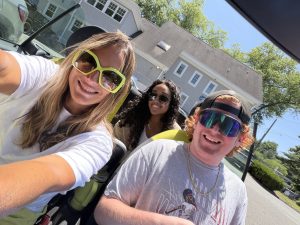
I am leaving Building Blocks with a lot more than clinical skills. I am leaving with memories, relationships, funny moments, lessons I know I will carry with me, and an even stronger love for pediatric occupational therapy. I feel so lucky that my first Level II experience allowed me to learn in a place where I could see firsthand how much of a difference an OT can make in a child’s life.

As I move on to my next Level II placement in acute care, I am excited to take everything I learned with me. I am especially excited because my next placement has a NICU, which has always been an area I have been passionate about. I know there is still so much for me to learn, but I feel ready to take the next step.
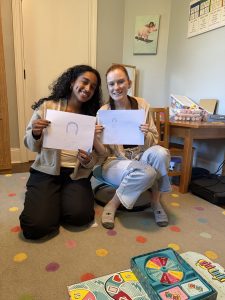
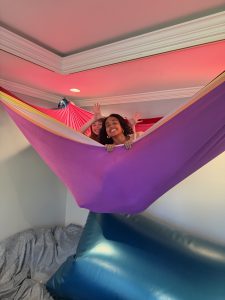
From Quinnipiac in 2024, to starting OT school at Iona, to completing my first Level II fieldwork at Building Blocks, this journey has already shaped me in so many ways. I am excited to see where the rest of this journey takes me and, hopefully, one day become the kind of OT that a child remembers because I made them feel safe, supported, and proud of what they could do. ❤️

Filed Under: Uncategorized

Primary Sidebar

Latest Posts

My Journey Into Occupational Therapy

Sensory Diets..What Are They and How Can They Help?

Therapeutic Listening: A Different Way to Support Your Child’s Development

Why Crawling is Important

Like Us on Facebook

Building Blocks Pediatric Occupational Therapy Services, LLC

Archives

Categories

More About Us

  • Home
  • Meet Our Team
  • About Occupational Therapy
  • Evaluations & Services
  • Contact Us
  • Blog
I thought this was so true and so funny 😂🧩 I thought this was so true and so funny 😂🧩

Scheduling OT clients around school, sports, siblings, therapies, cancellations, makeups… and then somehow fitting in your OWN kids’ lives and schedules too. 🤪

Basically one giant game of Tetris where the pieces never stop moving!

Who can relate? 😉🤪😜

#OccupationalTherapy #PediatricOT #OTLife #TherapistHumor #Explore
Here’s a simple visual for therapists to share w Here’s a simple visual for therapists to share with parents as a helpful handout on the developmental sequence of pencil grasps. ✏️

As a seasoned professional, one of my goals is to get practical, easy-to-use tools into the hands of as many therapists, parents, teachers, and caregivers as possible. If something I create can make a concept easier to understand or support a child’s development, I want it shared.

Please feel free to use it, share it, save it, and pass it along. I hope it helps! 💛
#PediatricOT #PencilGrasp #FineMotorSkills #Handwriting #Explore
Cutest William — a day in his OT session! 🤩 Cutest William — a day in his OT session! 🤩

Such huge growth today and such a gift to witness his progress in feeding and regulation skills. 💛 We are seeing him trying new texture foods, expanding his repertoire, and feeling more confident. He is also beginning to move toward more rotary chewing patterns, building upon all of the foods he already feels comfortable eating. His trach was removed a few months ago, and although he still has a G-tube, we are continuing to work on building safe and confident oral feeding skills.

We always start with high sensory input prior to feeding to help his body feel ready to learn. Today William wore his weighted vest and engaged in calming, organizing input including vibration plate + therapeutic music from Vital Links to support regulation and attention.

We also did gentle body massage and oral-motor input to the outside of his cheeks before moving into Z-Vibe work to help prepare his mouth for feeding success.

🥄 Then we moved into feeding!

We incorporated an acrylic stand mirror during feeding practice to support visual feedback and body awareness while eating. This helped William better understand mouth movements and positioning as we worked on oral control and coordination.

We are also introducing more intentional tongue and oral-motor awareness work, helping William become more comfortable handling food inside his mouth and learning how to use his tongue to move and manage food. We are working on tongue lateralization, positioning food onto the chewing surfaces, progressing from a munching pattern toward rotary chewing, and learning how to gather food together to form a manageable bolus for swallowing. 🤩

💡 OT TIP:
High sensory input before feeding or other challenging tasks can make a big difference. Movement, vibration, deep pressure, therapeutic listening, a metronome, or other calming and organizing input can help prepare the nervous system for participation.

✨ Small supports = big growth ✨

#Explore #PediatricOT #FeedingTherapy #SensoryIntegration #OTTips
FINE MOTOR + HANDWRITING STRATEGIES: A THERAPIST-F FINE MOTOR + HANDWRITING STRATEGIES: A THERAPIST-FRIENDLY GUIDE! ✨✏️

I know how much time therapists spend creating parent handouts, finding pictures, explaining tools, and putting together home programs — so I thought I would start sharing some of mine! 💛

My goal is to create resources that therapists can easily share with families and that parents can actually use at home — one less thing on your plate. 🌈

This guide focuses on the skills that support successful handwriting and everyday fine motor development, including:

🌟 Fine motor skills
🌟 Hand strengthening
🌟 Pencil grasp and pencil control
🌟 Visual motor integration
🌟 Visual perceptual skills
🌟 Bilateral coordination
🌟 Weight-bearing and proprioceptive activities
🌟 Handwriting strategies

You’ll also find some of my favorite tools and simple strategies for home, including different pencil grips, the HandyWriter, weighted writing tools, writing slant boards, adapted scissors, visual guides, spacing tools, and activities to strengthen the entire hand. ✋✏️

One of the biggest things I remind families is that handwriting is about so much more than holding a pencil!

Before we expect a child to sit down and write, we want to look at the foundations: shoulder stability, core strength, hand strength, bilateral coordination, visual attention, visual perception, motor planning, and the ability to coordinate what the eyes see with what the hands are doing.

Sometimes the best “handwriting practice” doesn’t involve a pencil at all. 💪🌈

Think:
✨ Animal walks
✨ Wheelbarrow walking
✨ Crawling
✨ Weight-bearing through open hands
✨ Playdough and resistive activities
✨ Clothespins and tongs
✨ Cutting activities
✨ Vertical surface play
✨ Visual scanning and visual perceptual games

SAVE this guide for your therapy toolbox and SHARE it with a parent, teacher, or therapist who could use a few new fine motor and handwriting ideas! 💾📤

These strategies are meant to provide general ideas and are not a substitute for an individualized occupational therapy evaluation when concerns are impacting a child’s participation or development.

#PediatricOT #FineMotorSkills #Handwriting #VisualMotor #explore
🌈 SOCIAL-EMOTIONAL TOOLBOX FOR PARENTS, TEACHER 🌈 SOCIAL-EMOTIONAL TOOLBOX FOR PARENTS, TEACHERS & THERAPISTS 🌈

Occupational therapy is personal to me. I truly love what I do, I love the children and families I work with, and I want to help as many people as I can. ❤️

After 25 years as an occupational therapist, I’ve learned there isn’t one strategy that works for every child or every moment. That’s why I created this Social-Emotional Handout & Toolbox for parents, teachers, therapists, caregivers, and anyone supporting children.

It’s filled with quick, practical tools you can reach for in the moment—recognizing body signals, emotional regulation, anxiety and worry, frustration and anger, transitions, flexible thinking, friendships, sensory strategies, movement, calming tools, and repairing after a hard moment.

My hope is that you save it, share it, and use it when a child needs a little extra support. Sometimes having the right tool at the right time can make all the difference. 💛

Please reach out anytime with questions, for additional resources, or if you’d like me to become part of your child’s team. Helping children, families, teachers, and fellow therapists is truly why I love what I do. 🌈

#PediatricOT #SocialEmotionalSkills #TeacherTools #TherapyTools #Explore
PRIMITIVE REFLEXES: NOW WITH VISUALS! ✨ My orig PRIMITIVE REFLEXES: NOW WITH VISUALS! ✨

My original Primitive Reflexes Parent Guide received so much attention and such wonderful feedback! 💛 One of the biggest requests was: “Can you show us pictures of the exercises?”

So here you go! 🌈

I created visual examples to go along with the home strategies so parents can more easily see what each movement should look like and feel more confident practicing them at home.

Primitive reflexes can play an important role in the foundations for movement, posture, coordination, balance, body awareness, attention, regulation, handwriting, motor planning, and everyday functional skills.

This guide covers:
🌟 Moro
🌟 ATNR
🌟 STNR
🌟 TLR
🌟 Spinal Galant
🌟 Palmar Grasp

You’ll also find simple home activities like cross-crawl, cat-cow, bird-dog, log rolls, starfish movements, animal walks, hand-strengthening activities, deep pressure, and breathing—now with pictures to provide a clear visual! 📸

The goal isn’t perfection. Keep the movements slow, playful, comfortable, and consistent. Even a short daily movement routine can be a great way to support foundational skills through play. 💪🌈

📚 For more information: Primitive Reflexes: Retained Reflexes and Integration Techniques by Justine Bedocs, OTR/L, available on Amazon.

💾 SAVE this guide to use at home and 📤 SHARE it with a parent, teacher, or therapist who may find the visuals helpful!

Primitive reflexes are only one piece of a child’s development. Individual concerns should always be evaluated by a qualified professional.

#PrimitiveReflexes #PediatricOT #OccupationalTherapy #HomeProgram #explore
🧡 WHY BALANCE ACTIVITIES MATTER! Balance is SO 🧡 WHY BALANCE ACTIVITIES MATTER!

Balance is SO much more than just standing without falling! Balance activities help build the underlying skills kids need to move, learn, play, and feel confident in their bodies. 🌈

Working on balance helps develop:

✨ Core strength & stability
✨ Postural control
✨ Coordination
✨ Motor planning
✨ Body awareness & proprioception
✨ Vestibular processing
✨ Bilateral coordination
✨ Protective reactions
✨ Focus & attention
✨ Confidence with movement

And when balance improves, we often see improvements in everyday skills too—running, jumping, climbing, navigating playgrounds, sitting upright for learning, participating in sports, dressing, and moving safely through the environment.

Balance boards are one of my favorite OT tools because there are SO many ways to use them—rocking, wobbling, squatting, reaching, playing games, or even using them during tummy time!

💙 Better balance → stronger bodies → more confident kids!

#Balance #Explore #OccupationalTherapy #PediatricOT #MovePlayGrow
🧡 THE PEANUT BALL — SUCH A GREAT BANG FOR YOU 🧡 THE PEANUT BALL — SUCH A GREAT BANG FOR YOUR BUCK!

I truly love a peanut ball for home therapy. For around $20, there are so many ways to use it while working on important underlying skills through play.

Sit, bounce, stretch, do pizza squishes, work on puzzles, strengthen the core, build balance, improve body awareness, motor planning and so much more.

It’s simple, affordable, fun, and one of those therapy tools that can grow with your child. 🌈

One inexpensive tool. So many possibilities.

Always supervise and choose activities that are appropriate for your child.

#PediatricOT #OccupationalTherapy #PeanutBall #ParentTips #Explore
Follow on Instagram

Copyright © 2026 · BBPOTS, LLC · Site Design by Little Blue Deer
Privacy Policy