In today’s reading, we are going to dive into some of the pencil grips that your child may be introduced to in occupational therapy and discuss why different grips are used.
Functional vs Inefficient Grasps
Before talking about pencil grips, it helps to understand the difference between functional and inefficient grasps.
Functional grasps – typically include:
- An open web space between the thumb and index finger
- The thumb, index finger, and middle finger working together to hold the pencil
- Stability and efficient movement for writing
Inefficient grasps often develop when a child compensates for decreased stability, finger strength, motor control, or endurance. These patterns may lead to:
- Hand fatigue
- Discomfort or joint stress
- Reduced writing speed
- Decreased handwriting legibility
There are more pencil grips out there than you might think! We could spend all day talking about the many options available, but just like shoes, not every style is the right fit for every child. Here are some of the most common pencil grips you may see in occupational therapy and how they can help support handwriting.
Types of pencil grips:
There are so many types of pencil grips available. Some commonly used grips in occupational therapy include:
- The Pencil Grip
- Crossover Gripper
- Grotto Grip
- The Writing C.L.A.W
- Twist n’ Write
- Classic Foam Grip
- Stetro Grip
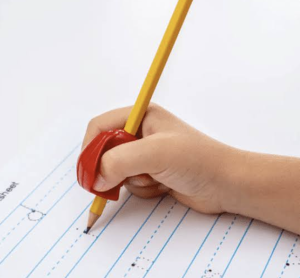 The Pencil Grip/Cross Over Grip: This soft, cushioned grip promotes proper finger placement for both left- and right-handed writers and encourages an open web space with a functional tripod grasp. It is particularly helpful for children who are still developing a stable grasp pattern and can reduce hand fatigue during writing tasks. However, because it provides minimal resistance to a thumb wrap pattern, it may not be the best option for children who demonstrate significant thumb wrapping.
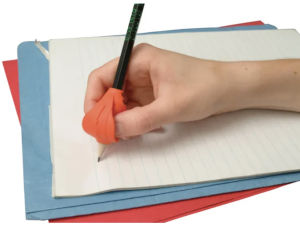
Grotto Grip: This is particularly helpful for children who demonstrate a thumb wrap grasp that closes the web space. Molded finger slots guide the thumb and index finger, while an indentation supports placement of the middle finger, making it easier to achieve a more efficient grasp.
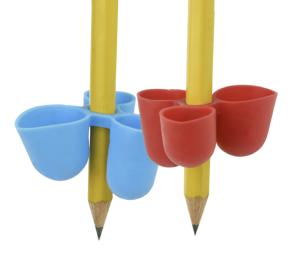
The Writing C.L.A.W: The Writing C.L.A.W. features three finger cups that guide finger placement and can be used by both left- and right-handed writers. It comes in multiple sizes, accommodating a variety of hand sizes and needs.
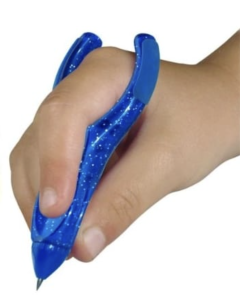
Twist n’ Write: Often called the “rocket pencil,” the Twist ‘n Write is a wishbone-shaped pencil rather than a traditional grip. Its unique design naturally encourages finger placement for a tripod grasp and can be a fun, motivating option for children who resist using separate pencil grips. The rubber sides also function as erasers.
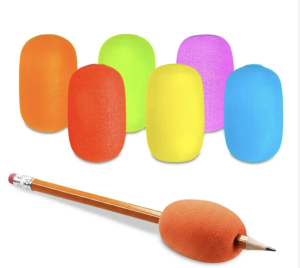
Classic Foam: This soft cylindrical sleeve provides a larger, more comfortable surface to hold. It can help reduce hand fatigue, relieve cramping, and provide a non-slip surface for children who benefit from increased grip size.
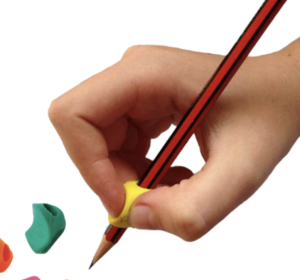
Stetro: The Stetro Grip is a smaller grip that works well for children who need less bulk than “The Pencil Grip.” It provides a smaller target for finger placement while still supporting efficient control.
There are many different types of pencil grips, and no single grip is right for every child. The goal is not perfection, but function. From an OT perspective, pencil grasp is just one part of handwriting. Postural stability, visual motor skills, hand strength, and fine motor development all work together to support successful writing.
Remember, a pencil grip is a tool, not a permanent solution. The best grip is the one that helps your child write comfortably, efficiently, and with confidence.
The goal is not perfection, but function.