• Skip to primary navigation
  • Skip to main content
  • Skip to primary sidebar
  • Home
  • Meet Our Team
  • About OT
  • Evaluations & Services
  • Testimonials
  • Blog
  • Books
    • Email
    • Facebook
    • Instagram
    • Phone

Building Blocks Pediatric Occupational Therapy Services

Fairfield Connecticut Occupational Therapist

203-341-0178
943 Post Rd E Suite A
Westport, CT 06880
bbpedot@yahoo.com
  • Home
  • Meet Our Team
  • About OT
  • Evaluations & Services
  • Books
  • Testimonials
  • Blog
    • Email
    • Facebook
    • Instagram
    • Phone

Therapeutic Listening – Vital Links and How it Can Help Your Child

June 6, 2025 By admin


What is the therapeutic listening program-Vital links:

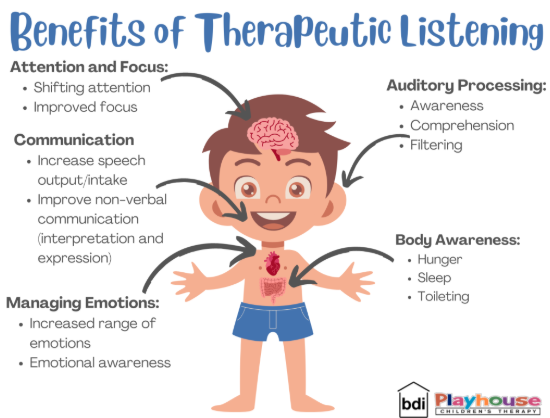
Therapeutic listening is an evidenced based, auditory intervention. This intervention incorporates developmental and sensory integration perspectives. This program uses electronic modifications coinciding with rhythmic sounds to work on attention, activate body movement, organizing the nervous system and more. This program contains many albums each working on something different. There is also no specific order that the albums need to be played so that the OT and client can work together to see what works best for them. 


Note: A certified professional must complete the course to be able to recommend and set up a schedule for this program. At the end of the course the professional is given a code that they may give to parents to order the program. These programs are obtained through vital links and vital sounds once the code is retrieved.


Protocol: 

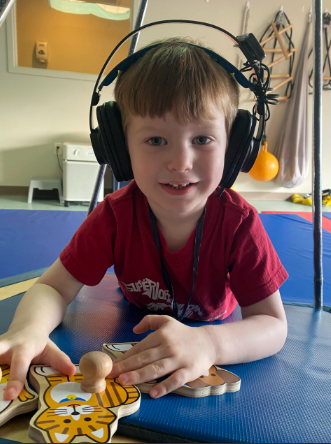
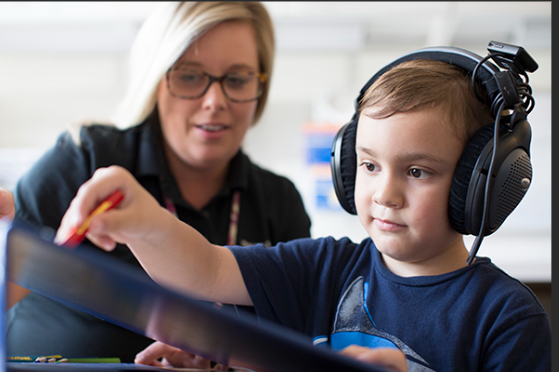
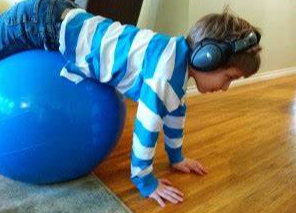
The protocol varies depending on the child. The program can last anywhere from 6-8 weeks to months depending on the child. The child should be listening to the program 1-2 times a day for 15-30 minutes 7 days a week. The sound must be at 3/4ths volume and each listening period must be 3 hours apart. There should also be no screen time while listening to this program or any activities that can take the listener’s attention away from the music. The program is best used with overhead headphones with a sansa clip to clip onto headphones and listen while engaging in gross motor or fine motor activities. 


Who is Therapeutic listening for?

  • Those who have communication difficulties
  • Those who have trouble transitioning 
  • Those who have a hard time with sleep, eating, bladder or bowel movements
  • Those with poor praxis and motor planning (coming up with an idea, planning and completing the task)
  • Those with irritability or mood difficulties
  • Those with trouble following directions
  • Those with poor attention
  • Those with difficulties interacting with peers
  • Those with difficulty responding to sounds/verbal directions
  • Those with challenges navigating space
  • Those with poor timing and sequencing of motor skills
  • Those with postural insecurity (fear of heights, playing on playground)
  • Those with a hard time regulating energy levels (too low arousal or hyperactive)
  • Those with abnormal response to various stimuli (sound, taste, touch, pain)


In Therapeutic Listening Level 1, each album works on something different.

Engagement section: 

  • This part works on sensory modulation and spatial awareness and each of these sections encompass albums noting more specific areas they work on. 
    • Sensory modulation section includes the following;
      • Links to modulation 
        • Works on basic modulation
      • Rhythm and Rhyme
      • Peach Jamz
        • Works on verbal and nonverbal communication
      • Razzberry Jamz
        • Works on regulation and sensory modulation
      • Early Mozart
        • Works on regulation and engagement
      • Mozart for Modulation
        • Works on regulation and biological rhythms 
    • Spatial awareness
      • Links to space 
        • Works on basic spatial awareness
      • Nature Pop
        • Works on space and core
      • Nature Winds
        • Works on higher level space and attention

Interaction Section:

  • This part works on core/praxis and contains albums working on more specific areas.
    • Core/Praxis section includes the following
      • Rhythm and Rhyme
      • Peach Jamz
      • Razzberry Jamz
      •  Apricot Jamz
        • Works on timing and sequencing bilateral activation
      • Surf Jamz
        • Works on postural activation and levity
      • Baroque for Modulation
        • Works on breath and core activation, which is a bridge to attention
      • Grape Jamz
        • Works on anchoring to place with simple strong rhythm
      • Strawberry Jamz
        • Works on core, interaction, and connection
      • Vivaldi for Modulation
        • Works on transitions
      • Bach
        • Works on refinement of core

Discrimination section:

  • This part works on attention and includes albums working on more specific areas.
    • Attention section includes the following:
      • Peach Jamz
      • Early Mozart for Modulation
      • Strawberry Jamz
      • Baroque for Modulation
      • Vivaldi for Modulation
      • More Mozart for Modulation
      • Mozart Strings Number 1
      • Bach for Modulation
        • Works on Refinement of communication and academics


Examples of activities to do while using the Therapeutic Listening program: 

  • Fine motor:
    • Putting together puzzles
    • Building blocks
    • Drawing/painting

  • Gross motor:
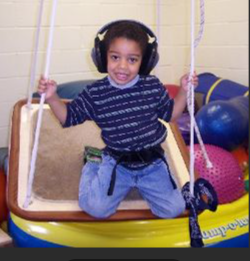
    • Balancing activities
    • Utilizing sensory swings
    • Walking

In conclusion, therapeutic listening – vital links program is an effective tool for a variety of interventions when instructed by a trained professional. To understand more about this training, it is recommended to ask a trained clinician or take a course.


Resources:

Therapeutic listening. Cleveland Clinic. (n.d.). https://my.clevelandclinic.org/pediatrics/departments/therapeutic-listening 

Therapeutic listening. Vital Links. (n.d.). https://vitallinks.com/therapeutic-listening/ 


Filed Under: Uncategorized

Primary Sidebar

Latest Posts

My Journey Into Occupational Therapy

Sensory Diets..What Are They and How Can They Help?

Therapeutic Listening: A Different Way to Support Your Child’s Development

Why Crawling is Important

Like Us on Facebook

Building Blocks Pediatric Occupational Therapy Services, LLC

Archives

Categories

More About Us

  • Home
  • Meet Our Team
  • About Occupational Therapy
  • Evaluations & Services
  • Contact Us
  • Blog
I thought this was so true and so funny 😂🧩 I thought this was so true and so funny 😂🧩

Scheduling OT clients around school, sports, siblings, therapies, cancellations, makeups… and then somehow fitting in your OWN kids’ lives and schedules too. 🤪

Basically one giant game of Tetris where the pieces never stop moving!

Who can relate? 😉🤪😜

#OccupationalTherapy #PediatricOT #OTLife #TherapistHumor #Explore
Here’s a simple visual for therapists to share w Here’s a simple visual for therapists to share with parents as a helpful handout on the developmental sequence of pencil grasps. ✏️

As a seasoned professional, one of my goals is to get practical, easy-to-use tools into the hands of as many therapists, parents, teachers, and caregivers as possible. If something I create can make a concept easier to understand or support a child’s development, I want it shared.

Please feel free to use it, share it, save it, and pass it along. I hope it helps! 💛
#PediatricOT #PencilGrasp #FineMotorSkills #Handwriting #Explore
Cutest William — a day in his OT session! 🤩 Cutest William — a day in his OT session! 🤩

Such huge growth today and such a gift to witness his progress in feeding and regulation skills. 💛 We are seeing him trying new texture foods, expanding his repertoire, and feeling more confident. He is also beginning to move toward more rotary chewing patterns, building upon all of the foods he already feels comfortable eating. His trach was removed a few months ago, and although he still has a G-tube, we are continuing to work on building safe and confident oral feeding skills.

We always start with high sensory input prior to feeding to help his body feel ready to learn. Today William wore his weighted vest and engaged in calming, organizing input including vibration plate + therapeutic music from Vital Links to support regulation and attention.

We also did gentle body massage and oral-motor input to the outside of his cheeks before moving into Z-Vibe work to help prepare his mouth for feeding success.

🥄 Then we moved into feeding!

We incorporated an acrylic stand mirror during feeding practice to support visual feedback and body awareness while eating. This helped William better understand mouth movements and positioning as we worked on oral control and coordination.

We are also introducing more intentional tongue and oral-motor awareness work, helping William become more comfortable handling food inside his mouth and learning how to use his tongue to move and manage food. We are working on tongue lateralization, positioning food onto the chewing surfaces, progressing from a munching pattern toward rotary chewing, and learning how to gather food together to form a manageable bolus for swallowing. 🤩

💡 OT TIP:
High sensory input before feeding or other challenging tasks can make a big difference. Movement, vibration, deep pressure, therapeutic listening, a metronome, or other calming and organizing input can help prepare the nervous system for participation.

✨ Small supports = big growth ✨

#Explore #PediatricOT #FeedingTherapy #SensoryIntegration #OTTips
FINE MOTOR + HANDWRITING STRATEGIES: A THERAPIST-F FINE MOTOR + HANDWRITING STRATEGIES: A THERAPIST-FRIENDLY GUIDE! ✨✏️

I know how much time therapists spend creating parent handouts, finding pictures, explaining tools, and putting together home programs — so I thought I would start sharing some of mine! 💛

My goal is to create resources that therapists can easily share with families and that parents can actually use at home — one less thing on your plate. 🌈

This guide focuses on the skills that support successful handwriting and everyday fine motor development, including:

🌟 Fine motor skills
🌟 Hand strengthening
🌟 Pencil grasp and pencil control
🌟 Visual motor integration
🌟 Visual perceptual skills
🌟 Bilateral coordination
🌟 Weight-bearing and proprioceptive activities
🌟 Handwriting strategies

You’ll also find some of my favorite tools and simple strategies for home, including different pencil grips, the HandyWriter, weighted writing tools, writing slant boards, adapted scissors, visual guides, spacing tools, and activities to strengthen the entire hand. ✋✏️

One of the biggest things I remind families is that handwriting is about so much more than holding a pencil!

Before we expect a child to sit down and write, we want to look at the foundations: shoulder stability, core strength, hand strength, bilateral coordination, visual attention, visual perception, motor planning, and the ability to coordinate what the eyes see with what the hands are doing.

Sometimes the best “handwriting practice” doesn’t involve a pencil at all. 💪🌈

Think:
✨ Animal walks
✨ Wheelbarrow walking
✨ Crawling
✨ Weight-bearing through open hands
✨ Playdough and resistive activities
✨ Clothespins and tongs
✨ Cutting activities
✨ Vertical surface play
✨ Visual scanning and visual perceptual games

SAVE this guide for your therapy toolbox and SHARE it with a parent, teacher, or therapist who could use a few new fine motor and handwriting ideas! 💾📤

These strategies are meant to provide general ideas and are not a substitute for an individualized occupational therapy evaluation when concerns are impacting a child’s participation or development.

#PediatricOT #FineMotorSkills #Handwriting #VisualMotor #explore
🌈 SOCIAL-EMOTIONAL TOOLBOX FOR PARENTS, TEACHER 🌈 SOCIAL-EMOTIONAL TOOLBOX FOR PARENTS, TEACHERS & THERAPISTS 🌈

Occupational therapy is personal to me. I truly love what I do, I love the children and families I work with, and I want to help as many people as I can. ❤️

After 25 years as an occupational therapist, I’ve learned there isn’t one strategy that works for every child or every moment. That’s why I created this Social-Emotional Handout & Toolbox for parents, teachers, therapists, caregivers, and anyone supporting children.

It’s filled with quick, practical tools you can reach for in the moment—recognizing body signals, emotional regulation, anxiety and worry, frustration and anger, transitions, flexible thinking, friendships, sensory strategies, movement, calming tools, and repairing after a hard moment.

My hope is that you save it, share it, and use it when a child needs a little extra support. Sometimes having the right tool at the right time can make all the difference. 💛

Please reach out anytime with questions, for additional resources, or if you’d like me to become part of your child’s team. Helping children, families, teachers, and fellow therapists is truly why I love what I do. 🌈

#PediatricOT #SocialEmotionalSkills #TeacherTools #TherapyTools #Explore
PRIMITIVE REFLEXES: NOW WITH VISUALS! ✨ My orig PRIMITIVE REFLEXES: NOW WITH VISUALS! ✨

My original Primitive Reflexes Parent Guide received so much attention and such wonderful feedback! 💛 One of the biggest requests was: “Can you show us pictures of the exercises?”

So here you go! 🌈

I created visual examples to go along with the home strategies so parents can more easily see what each movement should look like and feel more confident practicing them at home.

Primitive reflexes can play an important role in the foundations for movement, posture, coordination, balance, body awareness, attention, regulation, handwriting, motor planning, and everyday functional skills.

This guide covers:
🌟 Moro
🌟 ATNR
🌟 STNR
🌟 TLR
🌟 Spinal Galant
🌟 Palmar Grasp

You’ll also find simple home activities like cross-crawl, cat-cow, bird-dog, log rolls, starfish movements, animal walks, hand-strengthening activities, deep pressure, and breathing—now with pictures to provide a clear visual! 📸

The goal isn’t perfection. Keep the movements slow, playful, comfortable, and consistent. Even a short daily movement routine can be a great way to support foundational skills through play. 💪🌈

📚 For more information: Primitive Reflexes: Retained Reflexes and Integration Techniques by Justine Bedocs, OTR/L, available on Amazon.

💾 SAVE this guide to use at home and 📤 SHARE it with a parent, teacher, or therapist who may find the visuals helpful!

Primitive reflexes are only one piece of a child’s development. Individual concerns should always be evaluated by a qualified professional.

#PrimitiveReflexes #PediatricOT #OccupationalTherapy #HomeProgram #explore
🧡 WHY BALANCE ACTIVITIES MATTER! Balance is SO 🧡 WHY BALANCE ACTIVITIES MATTER!

Balance is SO much more than just standing without falling! Balance activities help build the underlying skills kids need to move, learn, play, and feel confident in their bodies. 🌈

Working on balance helps develop:

✨ Core strength & stability
✨ Postural control
✨ Coordination
✨ Motor planning
✨ Body awareness & proprioception
✨ Vestibular processing
✨ Bilateral coordination
✨ Protective reactions
✨ Focus & attention
✨ Confidence with movement

And when balance improves, we often see improvements in everyday skills too—running, jumping, climbing, navigating playgrounds, sitting upright for learning, participating in sports, dressing, and moving safely through the environment.

Balance boards are one of my favorite OT tools because there are SO many ways to use them—rocking, wobbling, squatting, reaching, playing games, or even using them during tummy time!

💙 Better balance → stronger bodies → more confident kids!

#Balance #Explore #OccupationalTherapy #PediatricOT #MovePlayGrow
🧡 THE PEANUT BALL — SUCH A GREAT BANG FOR YOU 🧡 THE PEANUT BALL — SUCH A GREAT BANG FOR YOUR BUCK!

I truly love a peanut ball for home therapy. For around $20, there are so many ways to use it while working on important underlying skills through play.

Sit, bounce, stretch, do pizza squishes, work on puzzles, strengthen the core, build balance, improve body awareness, motor planning and so much more.

It’s simple, affordable, fun, and one of those therapy tools that can grow with your child. 🌈

One inexpensive tool. So many possibilities.

Always supervise and choose activities that are appropriate for your child.

#PediatricOT #OccupationalTherapy #PeanutBall #ParentTips #Explore
Follow on Instagram

Copyright © 2026 · BBPOTS, LLC · Site Design by Little Blue Deer
Privacy Policy